


A B2B trading ecosystem built around Sellina
Sellina rarely operates as the sole system in a company. In real-world implementations, it sits alongside:
ERP system – stores basic data on products, prices, and product codes, as well as orders and customers. Orders from Sellina are transferred to this system.
OMS system – collects orders from multiple sales channels in one place, so you don't have to manually monitor several independent sources.
PIM System – Product Information Management – a place for managing an extensive product catalog that collects all technical data, attributes, descriptions and translations of products in one source.
Pricing Application – a place to manage complex pricing policies across multiple channels, enables the management of individual price lists per customer and helps control the minimum margin.
We connect these so that data doesn't have to be manually transferred between systems. Depending on the case, we do this using a ready-made plugin, API integration, or an intermediary database.
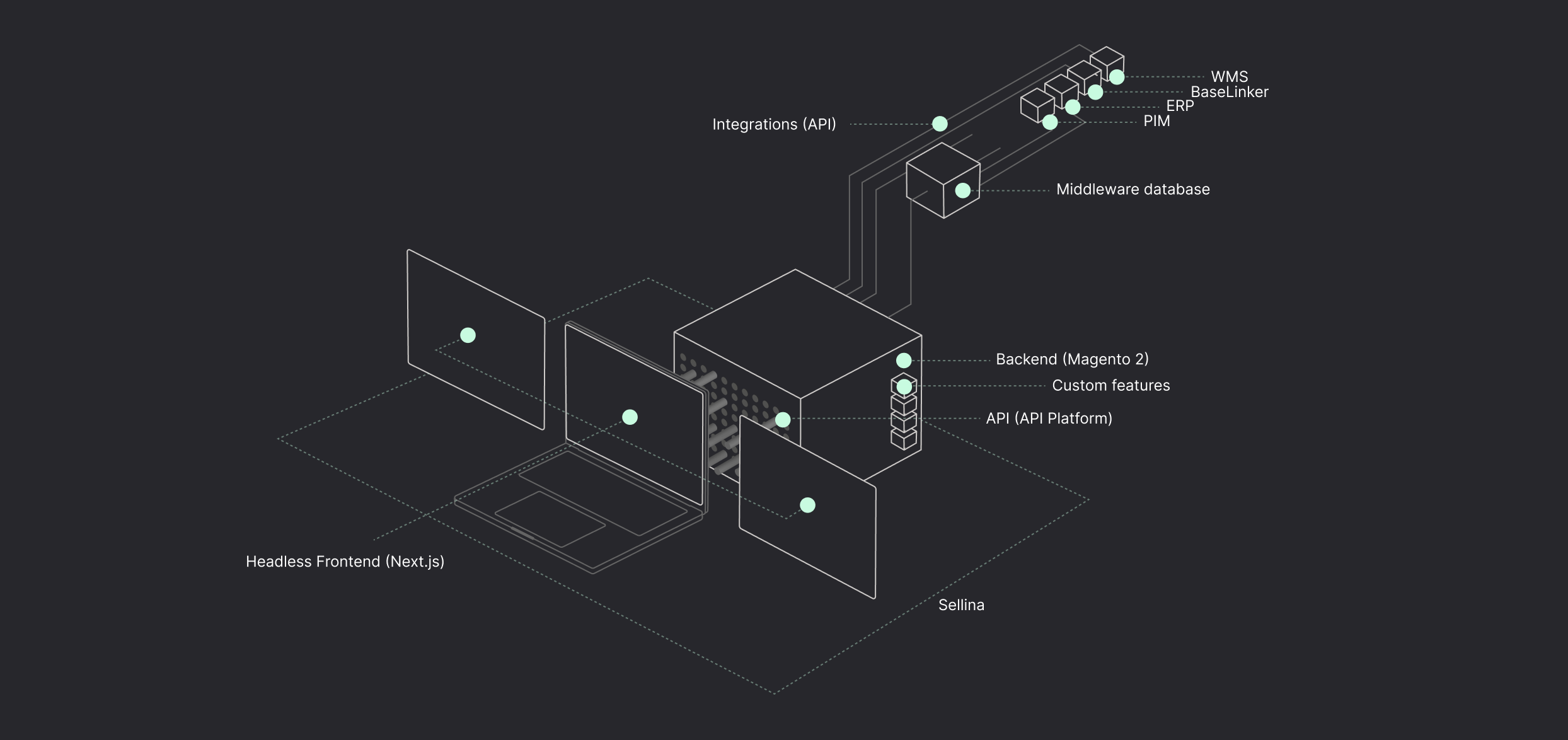
Systems that most often create a coherent B2B trading ecosystem with Sellina
ERP system
Sellina connects with him, she does not replace himAn order placed in Sellina is transferred to the ERP, centralizing the flow of information within the company. Furthermore, inventory levels and prices are transferred from the ERP to Sellina, ensuring that the store's offerings always reflect current values. We don't build a new accounting and warehousing system; we simply connect to the company's existing system. Examples of systems we can connect to can be found on the Integrations page.
PIM systems
When the catalog becomes too large to maintain manuallySellina integrates with PIM systems (e.g., Akeneo or Ergonode) – solutions that companies most often implement when catalogs grow to tens of thousands of products and hundreds of attributes. PIM serves as a central place to manage product information and facilitates its rapid distribution to all channels, including those connected to Sellina – for example, if you run a B2B and B2C store simultaneously, or separate websites for different markets, you update product data once in PIM, and it is distributed consistently to each of these channels.
OMS Systems
When sales go through several channels at onceOrder Management Systems (OMSs) most often appear in B2B sales ecosystems when a company operates simultaneously through multiple channels – for example, Sellina, marketplaces, and salespeople. In such a situation, it's best to aggregate orders from each source, synchronize them with inventory, and forward them for fulfillment. Sellina connects to such an OMS and sends data about placed orders to it, making it easier to manage them from a single location.
Price App
When standard group pricing is no longer enoughSellina has built-in support for pricing based on two factors: price per customer group and price based on the quantity of the product purchased (tier pricing). When commercial terms are negotiated individually with each customer, we can add the Price Application – our own tool for advanced pricing policy management, which extends the capabilities of the sales platform itself. The Price Application currently supports, among other things, individual price lists for individual customers, minimum margin control, and pricing policy management across multiple sales channels simultaneously.
CRM Systems
When the sales process lives beyond the storeIn a B2B ecosystem, CRM sits alongside the sales platform, as it addresses what happens before and between orders. Sellina integrates with popular systems such as Salesforce, Hubspot, Pipedrive, Zoho CRM, SugarCRM, Freshsales (Freshworks), Vtiger CRM, AgileCRM, and OroCRM, and the scope of data exchange is determined individually, depending on the CRM you use and your sales process.
Website
When you don't want to maintain a separate image pageMany companies run separate corporate websites and stores – meaning two systems to maintain, update, and secure. Sellina has built-in static pages, landing pages, and a blog, so you can run your branding website in the same system and from the same dashboard as your sales site, without having to build and maintain a second website.
What does it look like together in practice – examples from implementations
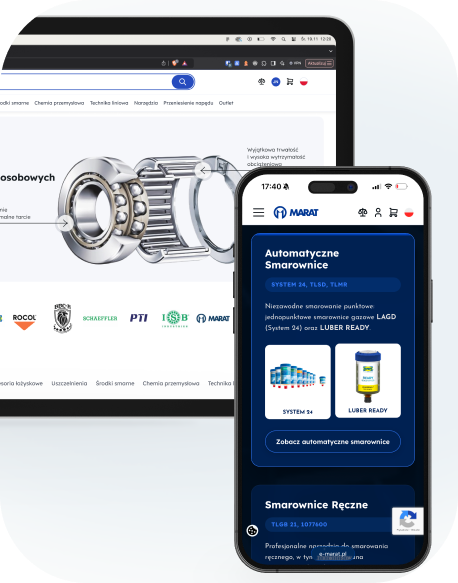
Marat
For this manufacturing and distribution company, we implemented Sellina along with the Pricing Application, integrating the entire system with the Ergonode PIM system and Comarch XL ERP. The sales platform, pricing tool, and ERP operate as a single, cohesive process, even though each is responsible for a different portion of sales.
See the case study →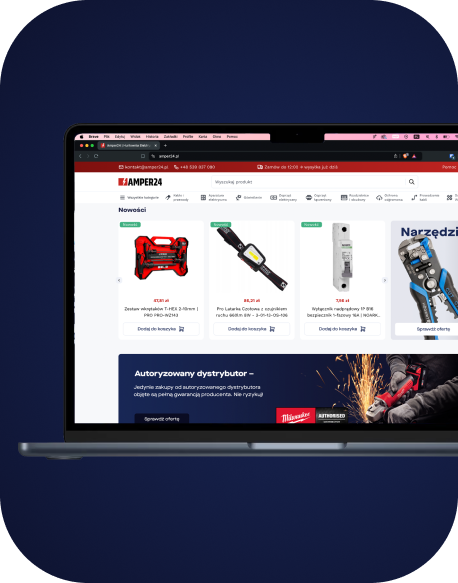
Amper24
Sellina integrates with Akeneo's PIM and Streamsoft Prestiż's ERP via the OMS system and file exchange. The result: the client has a single, coherent sales process, even though product, inventory, and accounting data reside in three different systems.
See the case study →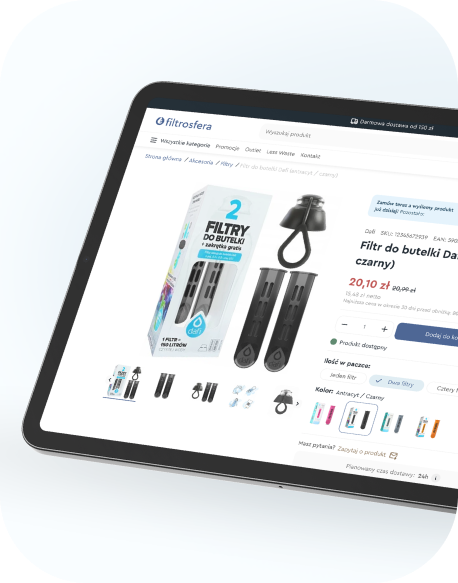
Filterosphere (Pozzani)
The water filtration system distributor connected Sellina to Akeneo's PIM (a central product repository integrated with ERP enova365) and its proprietary integration with the Apilo OMS system, supporting multi-channel sales (own store + Allegro). The entire architecture – new eCommerce, PIM, and OMS – was built in five months.
See the case study →
Have questions, let's talk.
Tell us what systems you already have – we'll tell you how to connect them with Sellina.
Where do you start if you're building a B2B ecosystem from scratch?
Not every Sellina implementation immediately requires the implementation of additional systems – apart from ERP, which is the main source of data on products and customers.
Signals that it is worth adding another element to the ecosystem:
The catalog grows not only in terms of the number of SKUs (it exceeds several thousand), but also in terms of the number of technical attributes, and product information needs to be distributed to several different sales channels – then PIM makes it easier to manage all this from one place.
You sell simultaneously through B2B/B2C e-commerce, marketplaces, and additional channels, such as merchants. An external OMS then consolidates orders from all these sources in one place. In some of our implementations, the OMS also acts as an intermediary for ERP integration.
Your pricing policy is quite complex – you have many individually negotiated commercial terms per customer or differentiated prices depending on the warehouse, and standard group price lists or quantity thresholds are no longer sufficient. In such cases, a dedicated Pricing Application organizes all these terms in one place.
We decide which elements to add and in what order at the design stage.
Pre-Implementation Analysis.
Frequently asked questions about B2B system architecture
Do I need a PIM to implement Sellina?
No. We add a PIM system (Akeneo or Ergonode) when the product catalog is so large or complex that manual management of product data and its distribution to various channels becomes too time-consuming and error-prone.
Can PIM operate independently of Sellina?
Yes. We also implement PIM systems as standalone projects, regardless of whether the client uses Sellina or another sales platform. PIM organizes product data and can power any channel – B2B/B2C stores, marketplaces, partner platforms – not just one specific e-commerce system.
Does Sellina have its own OMS?
No – Sellina integrates with external OMS systems (e.g., Apilo) when you need to consolidate orders from multiple sales channels. If you only sell through a single channel, it's usually not necessary.
How is the built-in pricing support in Sellin different from the Price App?
The basic version of Sellina supports pricing per customer group and per quantity purchased (tier pricing). The Price Application, however , is recommended when commercial terms are negotiated individually with multiple customers and managing them, for example, from the ERP, Excel, or individual price calculation system, is no longer efficient.
Does integration with my ERP require any process changes on my end?
Typically not – depending on the system, we use a ready-made plugin, API integration, or a proxy database. Each of these solutions translates data between Sellina and your ERP, so your team can continue working as usual. Additionally, as part of the project, we also conduct process analysis, which can identify additional optimization opportunities within the ERP itself, which can then be implemented across the company.
Do I need to implement all elements of the B2B ecosystem (PIM, OMS, Pricing Application) at the start?
No. Sellina is designed for expansion – we usually start with integration with ERP, as it provides the database of information about prices, products, and customers for the eCommerce system. Then, as growth and needs arise, we can implement and integrate PIM, OMS, or the Pricing Application.
How much does it cost to add another element to the ecosystem?
It depends on the scope – ERP integration, implementation, and connection to PIM, OMS, or Pricing Applications vary in cost depending on the specific system and the integration complexity. We prepare an accurate quote after a short conversation and understanding of the company's current system architecture – please contact us.
