


AI in Sellin and its ecosystem.
How do intelligent technologies support B2B sales?
Sellina is a modern B2B platform and the central hub of the systems we deliver to our clients. However, when we talk about artificial intelligence, we look at it much more broadly – the entire trading ecosystem that interacts with it.
It consists of:
Product Information Management (PIM) Systems
Price management modules
Dedicated AI agents and microservices
Artificial intelligence works in multiple ways in these elements:
Sometimes these are functions natively built directly into Sellina
Sometimes independent modules that simply exchange data with it
Regardless of its form, AI is an integral part of this environment. Below, we describe real-world use cases where AI automates routine tasks and accelerates sales processes.
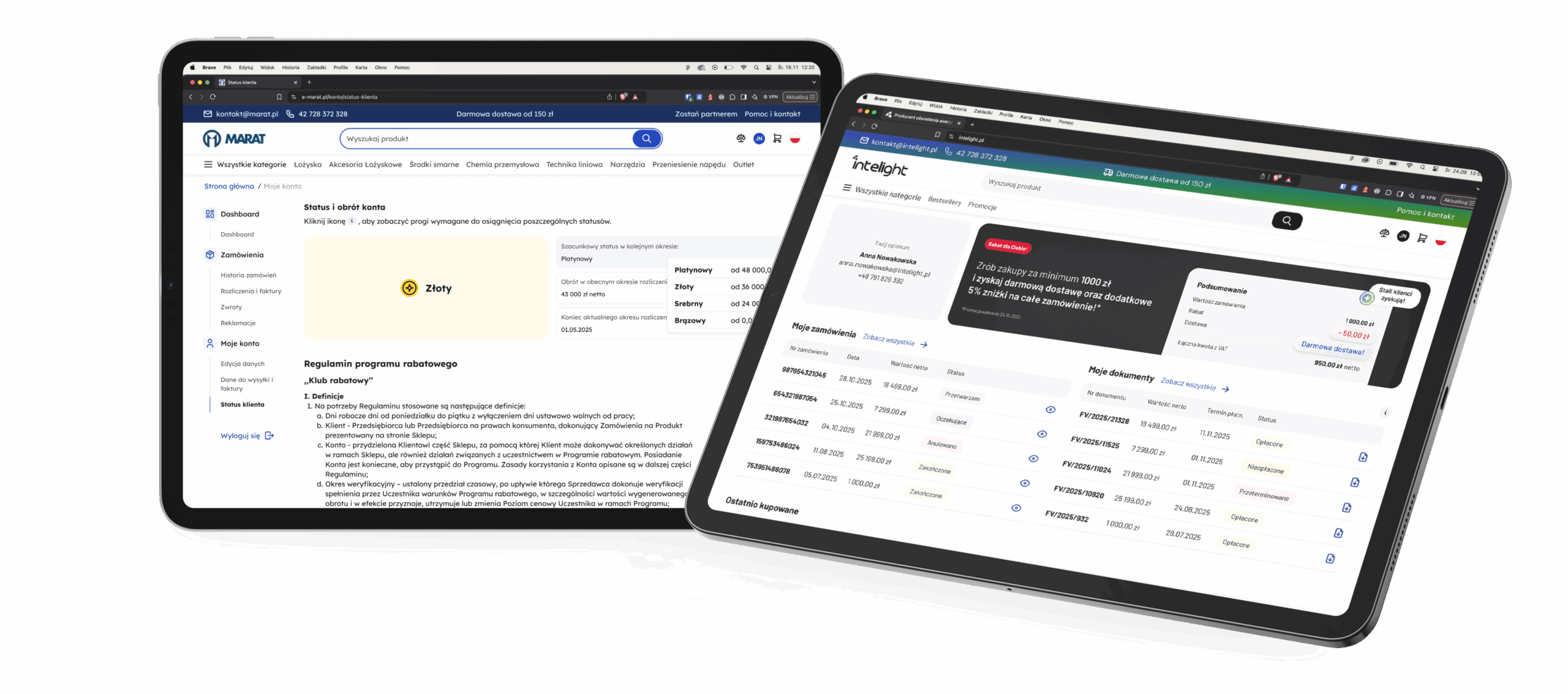
SPOT – automatic enrichment of product data
Before data reaches Sellina or PIM, it often needs to be organized first – this is handled by SPOT, our internal tool for importing and enriching product data with the help of artificial intelligence.
SPOT maps files from suppliers, validates the data model and automatically fills in gaps in two ways:
Generating SEO descriptions and content
By extracting missing attributes from photos and manufacturer websites.
This turns weeks of manual catalog rewriting into days, and Sellina receives data ready for sale, rather than a raw file from the supplier.
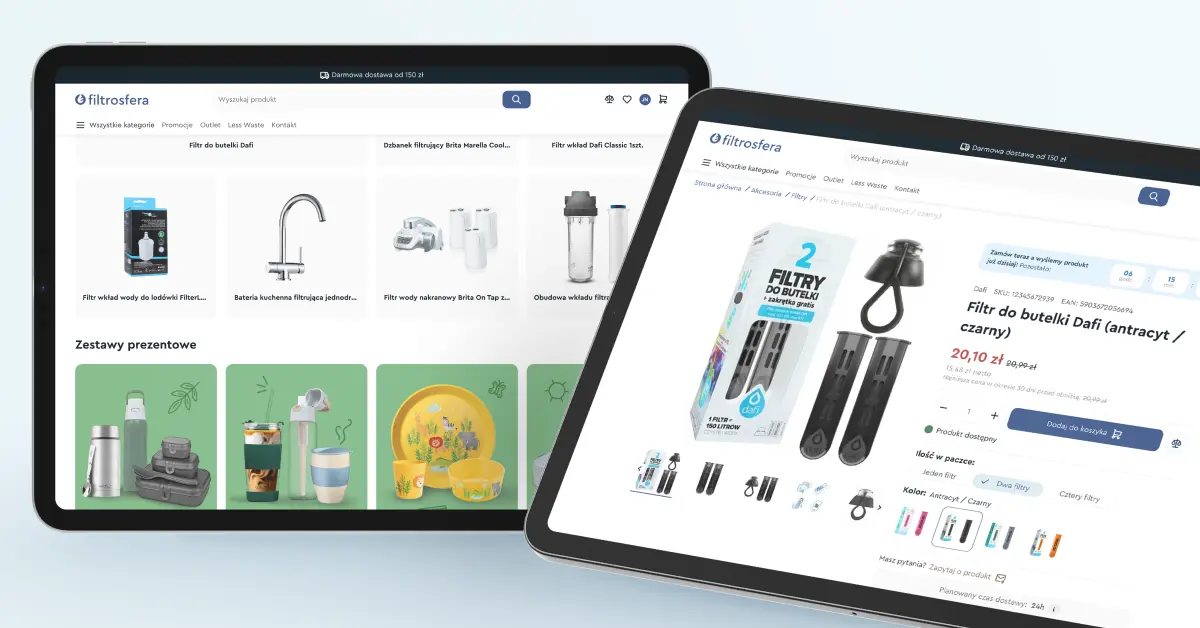
Generating product descriptions, i.e. Sellina's native functionality
Sellina has a built-in module for generating product descriptions based on their attributes. Instead of writing a description from scratch for each product, the system uses data already in your catalog (technical parameters, category, features) to prepare ready-made text for verification. This is especially important for multi-channel or international sales.
AI in PIM – content and translation automation with Akeneo integration
When Sellina is connected to PIM Akeneo, two additional AI modules that we have developed for this platform are added:
This module, based on a linguistic model, automatically generates unique descriptions based on basic product attributes. It's ideal for large catalogs where manually writing descriptions for each of the thousands of SKUs doesn't make economic sense.
Learn more
If you sell in several foreign markets, the module translates text attributes – descriptions, titles, product names – into any language en masse, instead of individually for each product.
Learn more
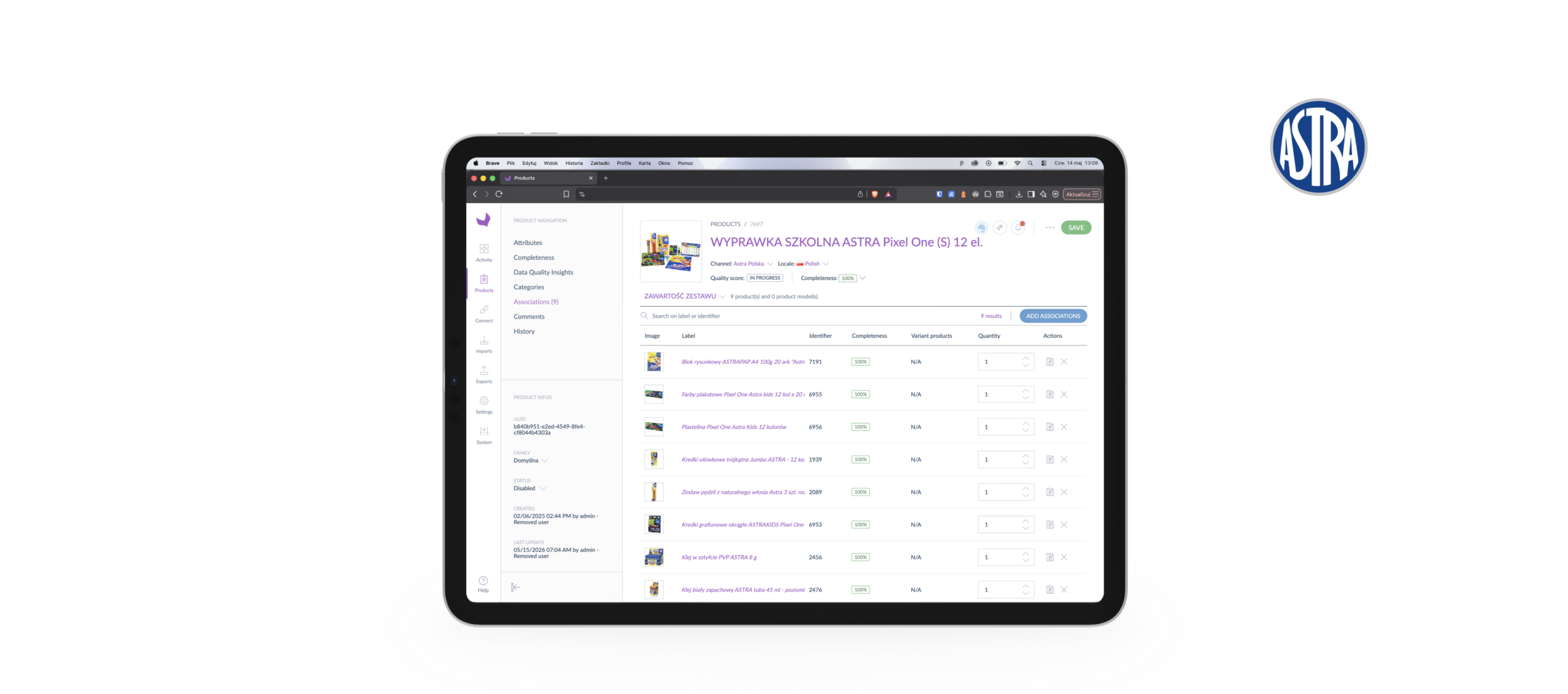
AI agent for handling quote requests and sales support
This is an extension that we implement in the B2B ecosystem when the sales department or customer service department is overloaded with repetitive customer inquiries about products, availability and offers.
The agent analyzes the content of the incoming inquiry (e.g., from an email), categorizes it, and prepares a ready-made draft response – also checking inventory levels, prices, and customer-specific discounts directly in the ERP. They don't send anything themselves. The salesperson reads the prepared draft and either approves or amends it.
What types of messages does the AI agent recognize?
It contains a specific product (code, EAN, name) and expresses the intention to purchase – e.g. "I would like to request an offer", "I want to order".
It only concerns product information: technical data, dimensions, availability, price – without any intention to purchase.
Inquiry about the progress of an order that the customer has already placed.
Notifications such as "damaged product", "I want to return", "an item is missing" - with verification of compliance with the process.
Short, courteous responses that do not require further action, e.g. "thank you for the offer", "everything is OK".
Security layer
The agent is one element of a broader system, not a standalone model exposed directly to the client – and this is important for security. It has no direct access to prompts, classifier rules, or API keys, so attempts to extract this data or inject malicious instructions have no recourse. Each response goes through a defined process before even reaching the merchant as a draft – eliminating the risk of the agent acting outside of its designed scope.
Use Case: In a project for Ostrowski Handel Internetowego (DobreGniazdka.pl, LuxMarket.pl), such an AI agent distinguishes technical nuances in product data, verifies stock levels and prepares a draft response with an offer directly in Gmail.
Effect: 80% of prepared answers do not require corrections by the salesperson, and the entire bidding process is 50% faster.
How do we implement AI-supported functionalities in Sellin?
We treat AI as a technology – a means to a specific end, not a product in itself.
The starting point depends on what stage you are at
Once you know which process you want to automate, we design the solution architecture and immediately begin building a Proof of Concept. If you're not sure where to begin, we first map your sales process—through a Pre-Implementation Analysis, a workshop with your team, and data analysis—to identify the real bottlenecks and prioritize automation based on a realistic return on investment.
Based on this knowledge, we build a Proof of Concept
We create a working prototype of a specific functionality, tested on your real data in a real sales situation. Before a decision is made about full implementation, we verify how the tool works in practice – whether it actually helps, before investing in the final version.
We advise at every stage
You don't have to come with a ready-made idea on how to do it - the entire Cognize consulting team , the same one that implements Sellina, will guide you through the entire process: from finding an area to automate (unless you already have one), through selecting the technology, to building and actually implementing the tool in your company.

Got any questions? Let's talk.
Tell us which process you want to automate and we'll tell you where to start.
Most frequently asked questions
Does AI in Sellin replace a salesperson?
No. The AI agent prepares ready-made draft responses, but the salesperson approves or corrects them—the system doesn't send anything to the customer itself. By avoiding wasting time manually preparing responses to repetitive queries, the system can focus on building deeper relationships with customers, seeking new contacts, or gathering feedback from existing ones.
Do AI-generated product descriptions require correction?
They usually require quick verification, especially for the first products in a new category – but they eliminate writing a description from scratch, which is most important for large catalogs and multi-channel sales.
Do I need a PIM to use AI for product content?
No, generating descriptions based on attributes is a module available in Sellin. We also have modules for mass content generation and AI translations in the Akeneo PIM.
Does the AI query agent send messages on its own?
No – he prepares a ready-made draft response, which the salesperson approves. This is a conscious design decision, not a technical limitation.
How much does it cost to launch AI-based functionalities in Sellin?
Depends on the scope – generating product descriptions is part of Sellina’s core functionality, AI modules in PIM and AI Agent for query handling are priced individually at the Pre-Implementation Analysis stage, depending on the scale of the catalog and the volume of queries.
Does AI also work with international sales and multiple languages?
Yes – this is one of the main use cases: generating descriptions in multiple languages and mass translation of product attributes when integrated with Akeneo PIM.
